A busier climbing wall also means more of a shared space.
Take Turns on Popular Problems
When lots of people want to try the same boulder it’s best to just have a loose queue. So just watch what they are doing and try to go after them. So one attempt and then get out of the way.
Keep Your Crash Mat Tidy
Remember to stack your crash mats up against the wall, and then move them aside as you go back to rest. This will stop you from accidentally blocking the landing of a neighbouring problem and potentially causing a hazard to others falling.
Hold Your Beta
Bouldering is generally a way of doing a problem yourself and not relying on someone else for advice. Try not to point out holds, unless someone specifically asks for help. A nod or a raised eyebrow with a “do you want a tip?” can be helpful though.
Limit Your Rest Time on the Problem
Step away from the problem after your attempt, don’t rest on it.
Communicate When You Move Around
Just say ‘behind you’ if you need to cross behind someone in the middle of their climb. For more ideas on safe use of training spaces see resources from national governing bodies of sport for your sport.
Book Ahead for Quieter Times
The bouldering wall can be spread out to ease congestion when booked out for specific periods of time as part of a structured session. Bouldering is covered in more detail at https://www.270climbing.com/bouldering.
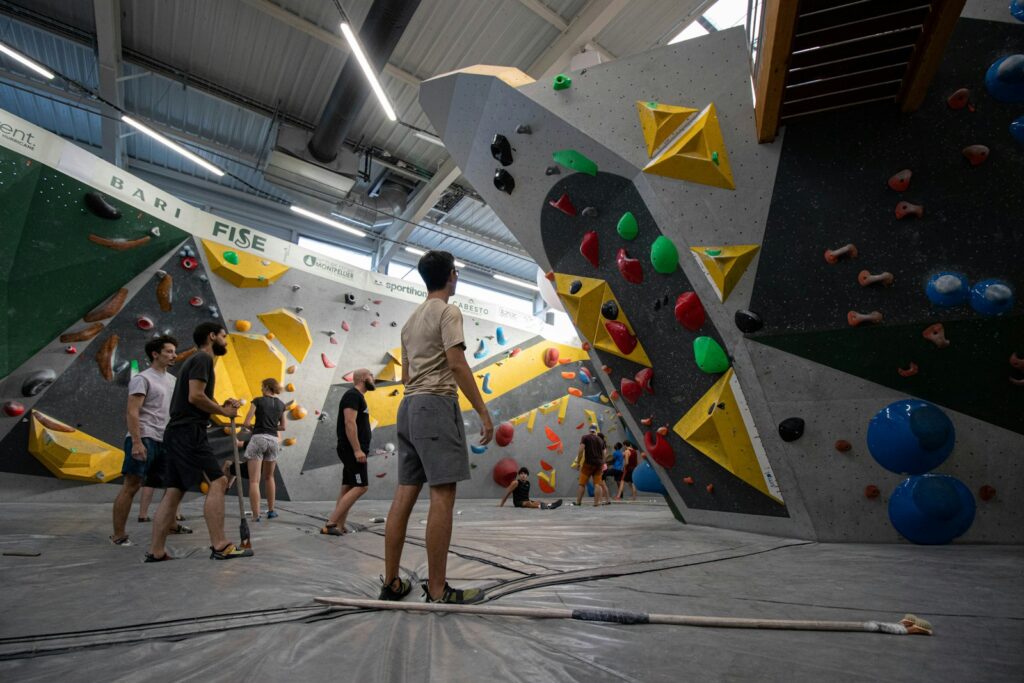
It doesn’t take much to be aware of other climbers on a busy training session.
